What Is Trinket Trading?
A trinket is a small token you give to someone, or swap with them for one of theirs.
History
The original (and parallel) version of this was a tradition between staff members at faires, marking a friendship or a shared moment, inspired by the original favours given to knights starting in around the 12th century.
Favours are not traded, sold, or bartered, but rather freely given as tokens of goodwill, kind regard, or love. The point was that the object (originally a piece of cloth or ribbon) meant something to the two people involved.
From Favours to Trinkets
Over the years, favours leaked out from staff to dedicated renfaire goers who would wear historical costumes and roleplay characters, but weren’t staff (known as playtrons).
As it became more widely known, some faires worked to shape it into trinket trading, a game of barter intended for children, where people would trade with a child who offered a joke, a word, even a small rock.
Trinket Trading Today
Over the years, the practice has spread and evolved, and especially in recent years, has exploded in popularity. It is a fun tradition to come out of the faire world, and it is one of the few ways to spend a day at Stillwater as a participant rather than an audience. You do not need a costume, a booth, or an invitation. You just need a pocket of small things and the nerve to say hello.
What Makes A Trinket
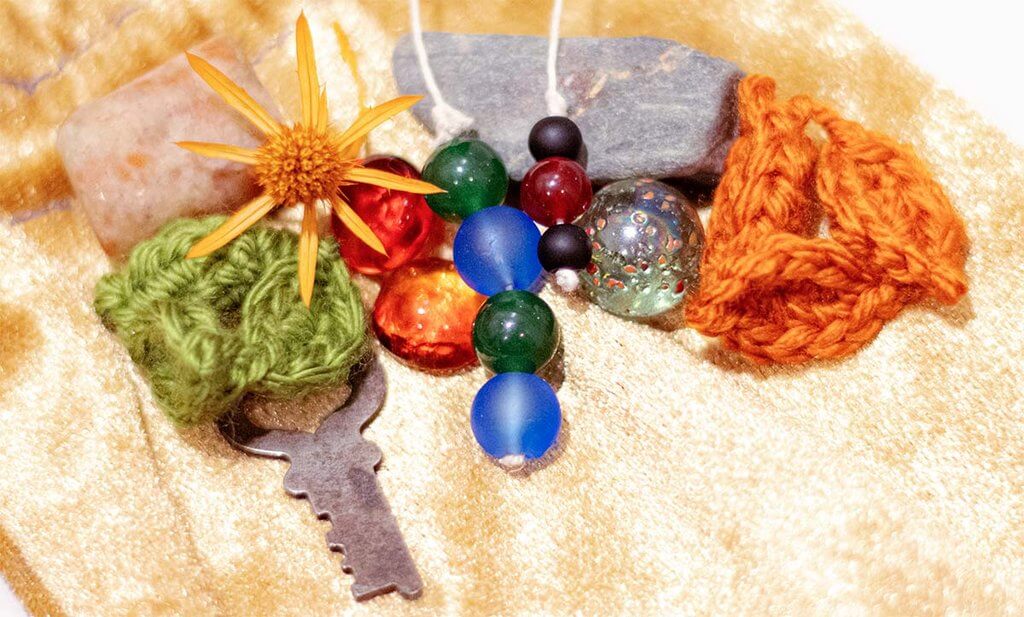
Trinkets here should look like they came from this place. Made by hand, or made from things that grow or are dug up: wood, cloth, cord, clay, wax, stone, bone, leather, paper, metal, beads. Stillwater is a village with a story, and a plastic duck or anime character tells a different one.
If you are stuck for ideas: carved or burnt wood tokens, wax seals, painted stones, knotted cord, small clay figures, pressed flowers, stamped tin, ribbon favors, hand cut paper charms, forged nails and hooks, bits of turned wood, dyed cloth scraps.
Trading Rules
Trinket trading is currently allowed, provided you follow our rules. We may change these rules as we see how trading works at our faire.
- Trinkets are given or traded, never sold.
No money changes hands for a trinket anywhere on the grounds. Our merchants are the only people who may sell in Stillwater. - Trinkets should be handmade or made from natural materials.
- No characters or brands from elsewhere. Nothing carrying the name, logo, or likeness of a company, film, game, band, or public figure. We cannot host trade in other people’s property.
- Our own name may appear on a trinket only if you wrote it by hand. Our marks may not be used on trinkets, and no printed or machine cut Outland Gate or Stillwater trinkets will be permitted.
- No food or drink may be traded.
- Nothing sharp, nothing that shatters, and no batteries.
Glass beads sewn onto something are fine. Corked vials, bottles, and anything breakable are not. - Nothing that makes a mess.
No glitter, no confetti, no loose sequins. No stickers of any sort, because they end up on our buildings, our signs, and our fences, and someone has to scrape them off. - Nothing that advertises.
No business cards, no shop names, no social handles, no QR codes, no flyers tucked in with the trade. If you sell things, we would rather you applied to be a vendor. - No assembling or crafting trinkets on the grounds.
- Trading with children requires adult approval.
We want to keep this activity safe for everyone, so no direct trading with children will be permitted, unless first approved by their accompanying adult. - Bring what fits in a pouch.
25 is plenty for a day. No bins, crates, or cases. - Trinkets are not tips.
Our performers, musicians, and street cast are paid performers, but those who accept tips use that money to offset costs related to them being with us. - Do not disturb merchant trade.
Only offer a trade to a vendor who has put out the trader’s mark, and never offer a trinket toward the price of anything. Do not trade items that resemble what our merchants sell, because we don’t want to take away from their being able to be with us at the faire. - Hand to hand, always.
No trinket tables, no baskets left out, nothing tied to a fence post or tucked into a stump for someone to find. The whole point is that you get to meet and know the person you got it from. If you would not put it in someone’s hand, do not leave it. - No preaching or campaigning.
A saint’s medal or a pilgrim badge suits the setting perfectly well. A tract, a slogan, or a candidate does not. - After dark, trade in the lit areas only.
Once the lights are on, the paths get dark quickly and the woods more so. Keep trading where people can see each other.
If someone is making you uncomfortable, tell any member of staff or cast. You will not be causing a fuss and we would much rather hear about it.
Trading Courtesies
These are not rules. They are how the good traders behave, and they help keep the custom fun for all.
- Ask once. If someone says no, or hesitates, wish them a good day and move on. Not everyone came here to trade and nobody should have to explain that twice.
- Do not interrupt. If a person is mid conversation, watching a show, or standing at a merchant’s table with their purse out, wait. You may be standing between a vendor and their rent.
- Lead with a kind word. A compliment on someone’s coat is a better opening than an outstretched hand, and it works whether or not they trade.
- Step off the path, to keep out of the way of others.
- Do not ask to see theirs first. Offer yours and take what comes. A trade you had to inspect first is a purchase with extra steps.
- Honor what you offered. If you have proposed a trade, see it through. Do not pull back because you liked theirs less than you hoped.
- Never tell someone their trinket is not good enough. Somebody’s first attempt at a wax seal is worth exactly as much as your fortieth.
The Trader’s Mark
If you want to trade, tie a green ribbon at your wrist or hang one from your belt.
Vendors, cast, and volunteers who wish to take part will wear the same ribbon. If someone is not wearing one, do not offer.
Bring your own ribbon. A limited number will be available at the gate.
If Something Goes Wrong
For the ordinary slips, expect a quiet word from a member of staff and nothing more.
Persistent problems will cost you your trading privileges for the day.
Selling, unsafe items, passing off someone else’s brand, or anything involving a child that has not gone through their accompanying adult will see you escorted off the grounds without a refund.
The Short Version
Make something small with your own hands. Put it in someone else’s. Do not get in the way of the people trying to earn a living here.
Huzzah, and happy trading.